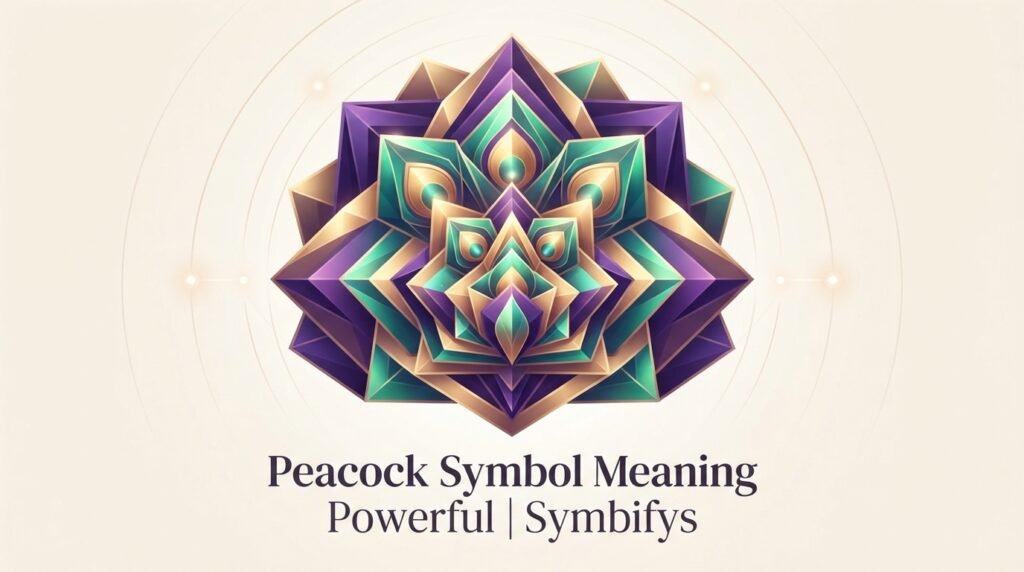
The peacock symbol meaning is closely connected to beauty, confidence, pride, renewal, and spiritual growth. Known for its brilliant feathers and striking appearance, the peacock has inspired stories, religious traditions, art, and personal beliefs across many cultures. For some people, it represents good luck and prosperity. For others, it symbolizes self-expression, inner beauty, or the courage to stand out.
But what does a peacock symbolize when you see one in real life, dream about it, or notice its image on social media?
The answer depends on the situation. A peacock spreading its feathers may represent confidence and celebration, while a peacock feather can symbolize wisdom, protection, or spiritual awareness. In dreams, the bird may reflect how you feel about your appearance, achievements, relationships, or place in the world.
People are often drawn to this symbol because its beauty carries a deeper message. It reminds us that being seen is not always the same as seeking attention, and feeling proud of ourselves does not have to mean looking down on others.
In this guide, you will discover the most common meanings of the peacock, its cultural and spiritual associations, its use in everyday conversations, and the differences between healthy confidence and excessive pride. You will also learn how to interpret the symbol without confusing cultural beliefs with universal facts.
1. Peacock Symbol Meaning – Quick Meaning
The peacock commonly symbolizes beauty, confidence, pride, renewal, and individuality. Its meaning can change according to the culture, setting, and personal experience of the person interpreting it.
Here are the most common interpretations:
- Beauty: Appreciating appearance, creativity, and elegance.
- Confidence: Feeling comfortable showing your personality and talents.
- Pride: Celebrating achievements and recognizing personal worth.
- Renewal: Beginning a new chapter or embracing personal growth.
- Wisdom: Seeking knowledge, awareness, or deeper understanding.
- Good fortune: Representing prosperity and positive possibilities in some traditions.
- Protection: Carrying a spiritual or symbolic association with safety.
- Individuality: Expressing yourself without being afraid to stand out.
For example, someone might say, “She is spreading her feathers today,” to suggest that a person is feeling confident and enjoying attention.
A person might describe a peacock feather as “a reminder to embrace your beauty,” connecting it with self-acceptance.
Someone decorating a home with peacock artwork might say, “I love what this bird represents,” referring to elegance, abundance, or cultural significance.
These interpretations are symbolic rather than fixed rules. A peacock can represent admirable confidence in one situation and excessive vanity in another.
2. Origin and Background of the Peacock Symbol
The peacock has a long history in mythology, religion, decorative art, and traditional storytelling. Its bright plumage and distinctive eye-shaped feather patterns have made it a memorable symbol in societies across Asia, Europe, and the Middle East.
Peacock symbolism in ancient traditions
In ancient Greek and Roman traditions, the peacock became associated with Hera and Juno, goddesses connected with marriage, queenship, and power. Its elaborate feathers were linked with majesty and divine beauty.
The eye-like markings on peacock feathers also encouraged associations with watchfulness and vision. However, these interpretations vary, and the feather pattern does not have one universal spiritual meaning.
Peacock meaning in Hindu traditions
In Hinduism, the peacock is strongly associated with Lord Kartikeya, also known as Murugan in many South Indian traditions. The bird serves as his mount and is connected with courage, victory, and the overcoming of negative forces.
Peacock feathers are also associated with Lord Krishna, who is frequently depicted wearing one in his crown. In this setting, the feather can evoke divine beauty, joy, devotion, and spiritual significance.
Because the peacock holds an important place in Indian culture, its image can carry meanings that go far beyond decoration.
Peacock symbolism in Buddhism
In some Buddhist traditions and artistic representations, the peacock is associated with wisdom and the transformation of negative qualities. Its ability to display striking feathers has also contributed to interpretations involving awareness and spiritual development.
These associations depend on the particular tradition and artwork rather than representing a single meaning shared by all Buddhists.
Peacock symbolism in Chinese culture
In Chinese decorative traditions, the peacock has been associated with beauty, dignity, status, and good fortune. Historical art sometimes used peacock imagery to communicate rank or distinction.
Its elegant appearance also makes it a popular motif in clothing, paintings, ornaments, and interior decoration.
How social media changed its meaning
Today, peacock imagery appears in profile pictures, tattoos, fashion, inspirational posts, and home decor. Online, the bird often communicates confidence, individuality, elegance, and a desire to express personal identity.
A person posting a peacock image might be celebrating a personal achievement. Another might simply appreciate the colors.
The modern meaning therefore combines historical symbolism with personal interpretation.
3. Real-Life Conversations About Peacock Symbolism
The following examples show how people might discuss peacock symbolism in everyday digital communication. They are illustrative conversations, not quotations from actual users.
WhatsApp conversation: A peacock feather as a gift
Person A: My aunt gave me a peacock feather today. She said it was special.
Person B: That’s lovely! Did she explain why?
Person A: She said it reminded her of Krishna and brought back childhood memories.
Person B: That makes it even more meaningful. Sometimes a gift carries a whole story.
Meaning: The feather represents personal memories and religious or cultural significance. Its meaning comes partly from the giver’s beliefs and the relationship between the two people.
Instagram DMs: A new beginning
Person A: Why did you use a peacock picture for your new profile?
Person B: I wanted something colorful. I’ve been trying to feel more confident lately.
Person A: Honestly, it suits your new energy.
Person B: That’s the idea. A little reminder that I don’t have to hide anymore.
Meaning: Here, the peacock symbolizes self-expression, personal growth, and the confidence to be visible.
TikTok comments: Confidence or showing off?
Person A: That peacock video is basically my personality.
Person B: Because you’re beautiful?
Person A: Because I walk into a room like I belong there.
Person B: Confidence is good. Just don’t start judging everybody else!
Meaning: This conversation highlights the difference between healthy self-confidence and arrogance. The peacock can represent either, depending on how its symbolism is used.
Text messages: A meaningful dream
Person A: I dreamed about a peacock spreading its feathers last night.
Person B: That sounds beautiful. What was happening in the dream?
Person A: I was standing on a stage, and everyone was looking at me. I wasn’t even scared.
Person B: Maybe it connects with how you’re feeling about your presentation next week.
Meaning: The bird becomes a possible reflection of confidence and visibility. Dreams do not have scientifically established universal meanings, so personal circumstances matter more than a fixed interpretation.
4. Emotional and Psychological Meaning of the Peacock
The peacock can represent several emotional experiences, particularly those connected with identity, recognition, confidence, and self-worth.
Confidence and self-expression
A peacock’s dramatic display makes it a natural symbol of being seen. People may use its image when they want to express confidence, celebrate a transformation, or show that they are comfortable with their individuality.
This interpretation can be especially meaningful for someone who has spent years worrying about other people’s opinions.
Beauty and self-acceptance
The bird’s feathers are often admired for their color and complexity. Symbolically, this can encourage people to appreciate their appearance, creativity, and personal qualities without comparing themselves constantly with others.
Its message does not have to be about physical beauty. It can also represent the beauty of a person’s character, ideas, or achievements.
Pride and the need for approval
The peacock can also symbolize vanity or a desire for admiration. In everyday language, calling someone a peacock may suggest that the person enjoys showing off.
This interpretation offers an important distinction: confidence means recognizing your value, while arrogance often involves treating others as less valuable.
Renewal and personal transformation
Peacocks naturally replace worn feathers through the molting process. This cycle can inspire symbolic interpretations of renewal, change, and new beginnings.
For someone recovering from disappointment or entering a new stage of life, the peacock may serve as a personal reminder that change can create room for growth.
A personal-style example
Imagine a student who has always avoided speaking in class because of a fear of making mistakes. After practicing for weeks, the student finally gives a presentation with confidence.
Later, the student chooses a peacock image for a journal cover. To that person, the bird represents courage and the freedom to be seen.
The symbol does not magically create confidence. Instead, it gives a meaningful image to an experience the person has already worked hard to achieve.
5. Peacock Symbol Meaning in Different Contexts
The same image can communicate different ideas depending on where and why it appears.
On social media
A peacock emoji, image, or illustration may suggest confidence, elegance, celebration, or individuality. In fashion and lifestyle posts, it can also highlight colorful personal style.
Context matters. Someone posting a peacock after receiving an award may be celebrating success, while someone sharing a feather may be discussing spirituality or nature.
In friendships and relationships
A peacock can represent attraction, admiration, or the desire to impress someone. Because the bird performs a visual display during courtship, it can also serve as a metaphor for trying to win another person’s attention.
However, the symbol does not automatically indicate romance. The accompanying message and the relationship between the people are more reliable clues.
At work or in professional settings
In professional environments, peacock imagery may communicate creativity, confidence, luxury, or distinction. It can suit an artistic portfolio, a fashion brand, or a design project.
Calling a colleague a peacock, however, may sound critical if it implies vanity or attention-seeking. In formal communication, describe the specific behavior rather than relying on a potentially insulting metaphor.
In casual versus serious communication
Casual use allows playful interpretations, such as describing a friend as a peacock before a party.
Serious conversations may involve religious traditions, cultural identity, personal transformation, or the symbolic meaning of a gift. In those settings, it is best to ask what the image means to the person sharing it rather than assuming.
6. When Not to Use the Peacock Symbol
Peacock symbolism is generally harmless, but certain situations call for care.
Avoid using it to insult someone. Calling a person a peacock can imply vanity, arrogance, or a constant need for attention. If that is not your intention, choose a clearer expression.
Respect religious and cultural meanings. A peacock feather may be sacred or deeply meaningful to someone who associates it with a particular religious tradition. Avoid turning such imagery into a joke when you do not understand the context.
Do not assume a spiritual message. Seeing a peacock does not prove that the universe is sending you a warning, blessing, or prediction. Spiritual interpretations are personal beliefs, not established facts.
Be careful in professional communication. A peacock metaphor may sound playful among friends but judgmental in a workplace review or formal email.
Avoid making assumptions about relationships. A peacock image does not necessarily mean someone is flirting, seeking attention, or trying to impress a romantic partner.
The safest approach is to interpret the symbol in context and respect the meaning its owner gives it.
7. Common Misunderstandings About Peacock Symbolism
Misunderstanding 1: The peacock always means pride
Pride is one common interpretation, but the bird can also represent beauty, wisdom, renewal, devotion, and prosperity. Its meaning depends on the cultural and personal context.
Misunderstanding 2: Peacock feathers always bring good luck
Some traditions associate peacock feathers with protection or good fortune. Other people value them simply for their beauty. There is no reliable scientific evidence that possessing a feather guarantees luck or protection.
Misunderstanding 3: Every peacock dream has the same meaning
Dreams are influenced by personal memories, emotions, and experiences. A peacock might feel inspiring to one person and intimidating to another.
Rather than treating a dream as a prediction, consider what the bird and its behavior meant to you.
Misunderstanding 4: A peacock image means someone is showing off
People choose peacock imagery for many reasons, including artistic interest, cultural heritage, religious devotion, and appreciation of nature. An image alone does not reveal someone’s personality.
Misunderstanding 5: The peacock has one universal spiritual meaning
No single interpretation applies to every culture or belief system. Understanding the tradition behind the symbol is more useful than assuming all meanings are interchangeable.
8. Peacock Symbol Meaning Compared With Similar Symbols
| Symbol or expression | Common meaning | Main difference |
|---|---|---|
| Peacock | Beauty, confidence, pride | Combines self-expression with possible vanity |
| Butterfly | Transformation, hope, renewal | Focuses more strongly on change and growth |
| Phoenix | Rebirth and resilience | Emphasizes rising after hardship |
| Eagle | Strength, freedom, vision | Often highlights power and independence |
| Swan | Grace, elegance, devotion | Usually emphasizes calm beauty and refinement |
| Dove | Peace, love, harmony | More strongly associated with peace and reconciliation |
| Peacock as an insult | Vanity, showing off | Emphasizes excessive self-display |
| “Own your beauty” | Self-acceptance | Encourages confidence without requiring a specific symbol |
| “Stay humble” | Modesty and perspective | Contrasts with excessive pride |
Key Insight
The peacock is especially useful as a symbol because it holds two contrasting meanings. It can encourage people to express themselves confidently, yet it can also warn against becoming too concerned with admiration. The context determines which meaning is most relevant.
9. Variations and Types of Peacock Symbolism
Different forms of peacock imagery can emphasize different ideas.
1. Peacock feather
Meaning: Beauty, spirituality, or protection.
A feather may represent a personal religious belief, a cherished memory, or an appreciation of nature.
2. Peacock spreading its feathers
Meaning: Confidence and self-expression.
The display can symbolize celebrating achievements or feeling comfortable being noticed.
3. White peacock
Meaning: Purity, peace, or spiritual reflection.
These are common symbolic interpretations of its striking white appearance, not universal cultural rules.
4. Blue peacock
Meaning: Beauty, dignity, and individuality.
Its vivid coloring often makes it a symbol of elegance and distinctive personal style.
5. Peacock in a dream
Meaning: A possible reflection of confidence, attention, or self-image.
The interpretation depends on the dreamer’s emotions and circumstances.
6. Peacock tattoo
Meaning: Individuality, transformation, beauty, or cultural devotion.
The design may commemorate a personal milestone or reflect the wearer’s spiritual beliefs.
7. Peacock in home decor
Meaning: Luxury, color, creativity, or prosperity.
Its detailed feathers make it a popular decorative motif in textiles, artwork, and furnishings.
8. Peacock in jewelry
Meaning: Elegance, distinction, or personal significance.
A necklace, ring, or brooch may express a person’s taste or connection to a cultural tradition.
9. Peacock in religious art
Meaning: A tradition-specific spiritual or religious association.
Its interpretation depends on the religion, story, deity, and artistic setting involved.
10. Peacock as a personality metaphor
Meaning: Confidence or vanity.
The expression may praise someone who stands out or criticize someone who constantly seeks admiration.
10. How to Respond When Someone Uses Peacock Symbolism
Your response should match the context. A playful social media comment needs a different reply from a serious conversation about faith or personal growth.
Casual replies
- “That’s such a beautiful symbol.”
- “I love the confidence behind it.”
- “The colors are absolutely stunning.”
- “That actually suits your personality.”
Funny replies
- “Someone’s ready for the spotlight!”
- “Main-character energy, I see.”
- “Those feathers are doing all the talking.”
- “Confidence level: full peacock mode.”
Use humorous replies only when you know the other person will appreciate the joke.
Mature replies
- “I like how it represents confidence without losing individuality.”
- “It’s interesting how the same symbol can represent both pride and beauty.”
- “That sounds like a meaningful reminder of your personal growth.”
- “I think the context makes its meaning even more interesting.”
Respectful replies
- “That’s a beautiful cultural connection. Would you tell me more about it?”
- “I appreciate the meaning this holds for you.”
- “It’s interesting to learn how different traditions interpret the peacock.”
- “I can see why that symbol is important to you.”
When you are unsure what someone means, a thoughtful question is usually better than guessing.
11. Regional and Cultural Usage of the Peacock Symbol
Western cultures
In Western art and popular expression, the peacock is frequently associated with beauty, luxury, pride, and display. Its striking appearance makes it an appealing symbol in fashion and interior design.
The phrase “proud as a peacock” commonly describes someone who feels pleased with an achievement. In a critical context, a peacock can also represent vanity.
Asian cultures
Peacock symbolism varies widely across Asia.
In Hindu traditions, the bird is associated with important religious figures, including Krishna and Kartikeya. In some Buddhist traditions, it has spiritual associations with wisdom and transformation.
In Chinese decorative art, peacock imagery can communicate dignity, status, beauty, or good fortune. These meanings depend on the period, setting, and artistic tradition.
Middle Eastern cultures
Peacocks appear in Persian and broader regional artistic traditions, including textiles, decorative designs, and garden imagery. Their beauty and elaborate feathers have inspired associations with elegance and majesty.
Some communities may attach spiritual interpretations to peacock imagery, while others regard it mainly as an artistic motif. It would be inaccurate to assign one meaning to every Middle Eastern culture or religious community.
Global internet culture
Online, the peacock often represents confidence, style, individuality, and the desire to stand out. It may appear in profile pictures, captions, fashion content, and discussions about personal transformation.
However, its meaning can be entirely personal. Sometimes a user simply likes the bird.
Gen Z versus Millennials
Some Gen Z users may employ peacock imagery as part of playful identity expression, aesthetic posts, or humorous references to confidence. Millennials may use the same symbol in lifestyle content, personal branding, or reflections on growth.
These are broad possibilities, not fixed generational rules. Individual preferences, cultural background, and the immediate conversation matter more than age alone.
12. Is the Peacock Symbol Safe for Kids?
Yes. Peacock imagery is generally appropriate for children and can introduce them to nature, art, cultural traditions, and symbolic thinking.
Parents and teachers can explain that people sometimes use animals to represent ideas. For example, a peacock may symbolize beauty or confidence, while a butterfly can represent change.
It is also helpful to explain that symbols do not always mean the same thing to everyone. Children can learn to appreciate cultural differences without assuming that a symbol has magical powers or predicts the future.
If a child encounters spiritual claims about peacock feathers online, adults can distinguish personal beliefs from scientifically supported facts in an age-appropriate way.
13. Frequently Asked Questions About Peacock Symbol Meaning
1. What does a peacock symbolize spiritually?
A peacock may symbolize wisdom, beauty, renewal, protection, or spiritual awareness, depending on the tradition. Its religious meaning varies across cultures, so the context is essential.
2. Is a peacock a symbol of good luck?
In some cultural traditions, peacock imagery is associated with good fortune, prosperity, or protection. However, these are beliefs rather than scientifically established effects.
3. What does seeing a peacock mean?
Seeing a peacock may remind someone of beauty, confidence, individuality, or renewal. Some people interpret the experience spiritually, while others simply appreciate the bird.
4. What does a peacock feather symbolize?
A peacock feather can represent beauty, spiritual devotion, wisdom, or protection. Its specific significance depends on the person’s beliefs and cultural background.
5. What does a peacock mean in a dream?
A peacock in a dream may reflect thoughts about confidence, appearance, recognition, or self-expression. Dream interpretations are subjective and should not be treated as reliable predictions.
6. Does the peacock symbolize pride or arrogance?
It can represent either. Pride may mean healthy satisfaction in your achievements, while arrogance suggests an inflated sense of superiority. The surrounding context determines the intended meaning.
7. What does a peacock tattoo mean?
A peacock tattoo may symbolize individuality, beauty, confidence, transformation, or cultural and religious identity. The wearer’s personal intention is the best guide to its meaning.
Conclusion
The peacock symbol meaning reaches far beyond the bird’s beautiful feathers. It can represent confidence, individuality, renewal, wisdom, spiritual devotion, and good fortune. In other situations, it serves as a reminder that pride can become vanity when the desire for admiration takes over.
Its cultural history makes the symbol even more meaningful. From religious art in South Asia to decorative traditions around the world, the peacock has inspired different interpretations shaped by local beliefs and personal experiences.
When you encounter a peacock in a dream, a gift, a tattoo, or a social media post, consider the surrounding context before deciding what it means. Ask what the symbol represents to the person using it, and remember that personal meaning can be just as important as traditional symbolism.
Perhaps the most valuable lesson of the peacock is simple: you can appreciate your own beauty, celebrate your achievements, and express your individuality without needing to prove that you are better than anyone else.
That balance turns the peacock from a striking image into a meaningful reminder of confidence with humility.
discover more post
What Does the Rainbow Butterfly Symbol Mean 2026
What Does the Majin Symbol Mean The Powerful Meaning 2026
What Is a Swastika Symbol Mean The Surprising History Behind …

Mia Enderson is a dedicated content writer and digital research specialist with over 7 years of experience creating insightful and reader-focused content. She specializes in technology, business, and online trends, delivering well-researched and engaging articles. At Symbifys.com, Mia is committed to providing accurate, valuable, and easy-to-understand information that helps readers make informed decisions. Her passion for quality content and attention to detail have earned the trust of a growing audience.