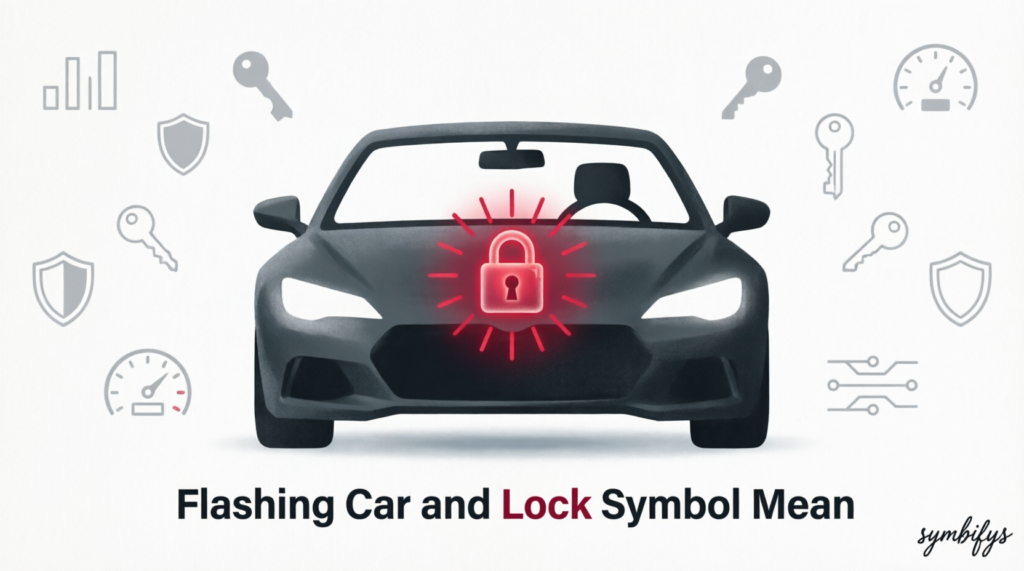
If you’ve noticed a flashing car and lock symbol on your dashboard or near your vehicle’s instrument cluster, you’re probably wondering whether it’s a warning sign or something completely normal. The good news is that, in most cases, this light is simply part of your car’s anti-theft system. However, if it behaves differently than usual, it could point to an issue that needs attention.
In this guide, you’ll learn exactly what the flashing car and lock symbol means, why it flashes, when it’s normal, when it’s a sign of trouble, and what you should do if the light won’t turn off. Whether you drive a Honda, Toyota, Nissan, Ford, Hyundai, Kia, or another modern vehicle, the explanations below will help you understand what your car is trying to tell you.
Featured Snippet
The flashing car and lock symbol usually indicates that your vehicle’s immobilizer or anti-theft security system is active. A slow blinking light after you lock the car is normal and helps deter theft. If the light stays on, flashes rapidly, or appears while driving, it may signal a problem with the key, immobilizer, or vehicle security system.
What Is the Flashing Car and Lock Symbol?
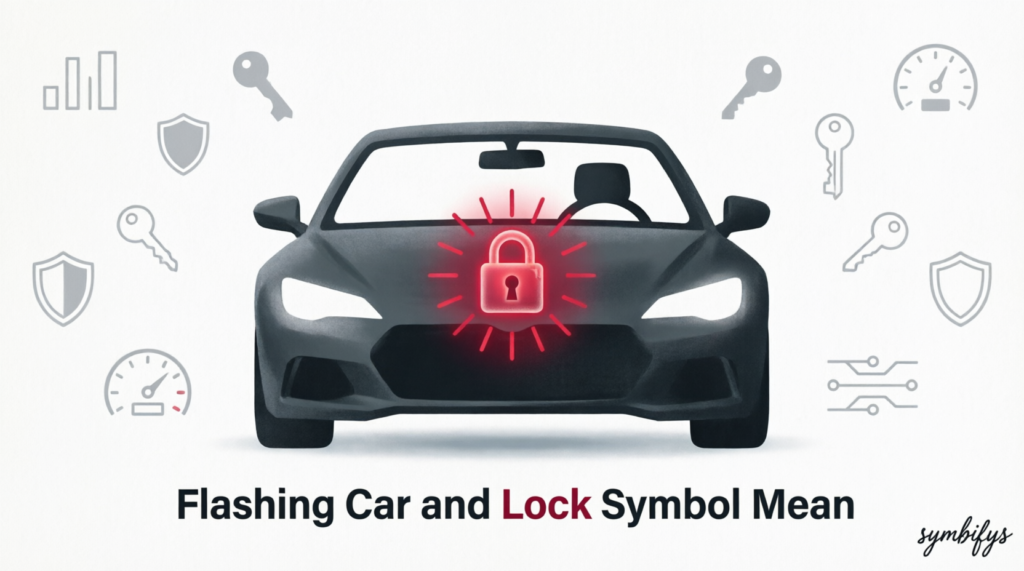
The flashing car and lock symbol is a security indicator found in many modern vehicles. Although the exact design varies by manufacturer, it usually shows a small car with a padlock or key inside or beside it.
Its primary job is to let you know the vehicle’s anti-theft system, often called the immobilizer, is working.
Unlike warning lights that signal mechanical problems, this symbol is mainly related to protecting your vehicle from unauthorized use.
What Does It Look Like?
Depending on the vehicle brand, you may see:
- A car with a padlock
- A car with a key inside it
- A padlock by itself
- A key-shaped security light
- A red blinking security indicator
Even though the icons differ slightly, they generally serve the same purpose.
What Does the Flashing Car and Lock Symbol Mean?
For most drivers, the flashing light means your vehicle is locked and the security system is armed.
When you turn off the engine and lock the doors, the immobilizer begins monitoring the vehicle. It checks that only a programmed key or key fob can start the engine.
If someone tries to start the car with an unrecognized key, the immobilizer prevents the engine from running.
In Simple Terms
Think of the flashing light as a security guard on duty.
When the light blinks normally, it’s letting potential thieves know the vehicle is protected by an electronic anti-theft system.
In most situations, a blinking light after locking your vehicle is completely normal.
How the Immobilizer System Works
Understanding the immobilizer helps explain why the symbol flashes.
Modern cars use a small electronic chip inside the key or key fob. This chip communicates with the vehicle whenever you try to start the engine.
The process usually works like this:
| Step | What Happens |
|---|---|
| 1 | You insert the key or press the Start button. |
| 2 | The immobilizer reads the chip inside the key. |
| 3 | The system checks whether the code matches its stored records. |
| 4 | If the code is correct, the engine starts normally. |
| 5 | If the code doesn’t match, the engine remains disabled. |
This entire process happens in just a fraction of a second.
Why Does the Symbol Flash?
There are several reasons why you may notice the flashing car and lock symbol.
Normal Security Mode
This is the most common reason.
After you lock the vehicle, the anti-theft system becomes active. The light flashes slowly every few seconds to show that the system is protecting the car.
Nothing needs to be repaired.
Key Recognition
When you unlock the car and start the engine with the correct key, the light should disappear within a few moments.
This tells you the immobilizer successfully recognized the authorized key.
Security System Self-Check
Some vehicles briefly illuminate the light every time you turn the ignition on.
This is simply the system checking that everything is working correctly.
The light should turn off shortly afterward.
When Is the Flashing Light Completely Normal?
Many new drivers mistake this symbol for a warning light.
The following situations are usually expected:
- The light flashes after locking the vehicle.
- It blinks every few seconds while the car is parked.
- It disappears after starting the engine.
- It briefly appears during ignition before going out.
- It flashes overnight while the vehicle is parked.
These behaviors indicate the security system is functioning as designed.
When Is the Flashing Car and Lock Symbol a Problem?
Sometimes the light behaves differently, which may indicate a fault.
Pay attention if you notice any of these situations:
The Light Keeps Flashing While Driving
A security light that continues flashing after the engine starts isn’t considered normal for most vehicles.
Possible causes include:
- Immobilizer malfunction
- Communication error
- Key recognition failure
- Electronic control module problem
The vehicle may still drive normally, but the issue should be diagnosed.
The Engine Won’t Start
If the engine cranks but won’t stay running, the immobilizer may not recognize your key.
Common reasons include:
- Damaged transponder chip
- Weak key fob battery (for some push-button systems)
- Unprogrammed replacement key
- Faulty immobilizer antenna
- Electrical issue within the security system
Rapid Flashing
A rapidly blinking security light often indicates the system detected an error rather than simply being armed.
Your owner’s manual can help confirm what rapid flashing means for your specific vehicle model.
Common Causes of a Flashing Car and Lock Symbol
Several issues can trigger unusual security light behavior.
Dead or Weak Key Fob Battery
If your push-button start vehicle struggles to detect the key, replacing the key fob battery is often the easiest solution.
A weak battery can reduce the communication range between the key and the vehicle.
Damaged Key Transponder
Inside most keys is a tiny electronic chip.
If the chip becomes damaged by impact, water, or internal failure, the immobilizer may reject the key.
Faulty Immobilizer Antenna
The antenna around the ignition switch or inside the steering column reads your key’s signal.
If this component fails, the car cannot verify the correct key.
Low Vehicle Battery Voltage
A weak vehicle battery can sometimes interfere with electronic security systems.
If several dashboard lights appear along with starting problems, checking the battery is a smart first step.
Electrical Wiring Problems
Loose connectors, damaged wiring, or blown fuses can interrupt communication between security system components.
Electrical faults usually require professional diagnosis.
Does Every Car Use the Same Symbol?
No.
Automakers use different versions of the security indicator, although they all serve a similar purpose.
| Manufacturer | Common Security Indicator |
|---|---|
| Honda | Car with key or green key indicator |
| Toyota | Car with padlock |
| Nissan | Red security light |
| Ford | Car with lock or theft indicator |
| Hyundai | Car and key symbol |
| Kia | Immobilizer indicator |
| Mazda | Security light or key symbol |
| Subaru | Security indicator light |
Always check your owner’s manual because the exact appearance and behavior can vary by model year and trim level.
Does the Flashing Symbol Mean Someone Tried to Steal Your Car?
Usually, no.
Many people worry when they notice the light blinking at night, but that’s exactly when it’s supposed to flash.
The light simply shows the anti-theft system is active.
However, if the alarm has recently sounded, your vehicle shows signs of tampering, or the security system suddenly behaves differently, it’s worth inspecting the vehicle for any attempted break-in or system fault.
Can You Drive With the Flashing Car and Lock Symbol?
It depends on when the light appears.
| Situation | Safe to Drive? |
|---|---|
| Flashing after locking the vehicle | Yes, completely normal |
| Briefly on during startup | Yes |
| Turns off after engine starts | Yes |
| Continues flashing while driving | Drive cautiously and have it inspected soon |
| Engine won’t start because of the light | No, the security system likely needs attention |
In many cases, a continuously flashing security light won’t immediately leave you stranded, but ignoring it could eventually prevent the vehicle from starting if the underlying problem worsens.
How to Fix a Flashing Car and Lock Symbol
If the security light isn’t behaving normally, start with the simplest checks before assuming there’s a major problem.
1. Try Your Spare Key
If you have a second programmed key, use it to start the vehicle.
If the spare key works without triggering the security light, the original key or key fob may be damaged and should be replaced or reprogrammed.
2. Replace the Key Fob Battery
For vehicles with a push-button start, a weak battery inside the key fob can prevent reliable communication.
Replacing the battery is inexpensive and often solves intermittent recognition problems.
3. Check the Vehicle Battery
Low battery voltage can affect many electronic systems, including the immobilizer.
Signs of a weak battery include:
- Slow engine cranking
- Dim headlights
- Multiple dashboard warning lights
- Clicking sound when starting
If the battery is old or repeatedly loses charge, have it tested.
4. Lock and Unlock the Vehicle Again
Sometimes the security system simply needs to reset.
Try this process:
- Lock all the doors.
- Wait about one minute.
- Unlock the vehicle using the key fob.
- Start the engine.
If the light returns to normal, the issue may have been temporary.
5. Look for Dashboard Messages
Some vehicles display additional messages such as:
- Key Not Detected
- Immobilizer Active
- Security System Fault
- No Key Present
These messages can provide clues about what’s causing the warning.
6. Scan the Vehicle for Trouble Codes
Many immobilizer problems store diagnostic trouble codes that can be read with a professional scan tool.
A technician can identify faults involving the:
- Immobilizer control module
- Body control module
- Key programming
- Antenna ring
- Electrical communication network
This is often the fastest way to pinpoint the exact cause.
Common Mistakes to Avoid
Many drivers accidentally make the problem worse by trying random fixes.
Avoid these common mistakes:
- Ignoring a flashing light that appears while driving
- Assuming every flashing security light means the car is being stolen
- Replacing expensive parts without diagnosing the issue
- Using an unprogrammed replacement key
- Continuing to drive if the engine repeatedly stalls after starting
- Disconnecting the battery without understanding the possible consequences for the security system
A careful diagnosis usually saves both time and money.
What Mechanics Check First
When a vehicle arrives with an immobilizer or security warning, technicians generally inspect the easiest possibilities before replacing components.
Their checklist often includes:
| Inspection | Why It Matters |
|---|---|
| Vehicle battery | Low voltage can confuse electronic modules. |
| Key fob battery | Weak batteries reduce signal strength. |
| Spare key test | Determines whether the original key is faulty. |
| Diagnostic scan | Identifies stored security system codes. |
| Immobilizer antenna | Confirms the key is being read correctly. |
| Wiring and connectors | Looks for loose or damaged electrical connections. |
This step-by-step approach helps avoid unnecessary repairs.
Expert Insight
The flashing car and lock symbol is one of the most misunderstood dashboard indicators.
Unlike engine or brake warning lights, it usually doesn’t indicate a mechanical failure. Instead, it’s a communication signal between your vehicle and its anti-theft system.
The most important thing to remember is when the light appears:
- After locking the car: Normal.
- During startup for a few seconds: Usually normal.
- While driving or preventing the engine from starting: Needs attention.
Watching the light’s behavior is often more helpful than focusing on the symbol itself.
Frequently Asked Questions
Why is my car and lock light flashing when the car is off?
This is normal in most vehicles. It shows the anti-theft system is armed and monitoring the vehicle while it’s parked.
Can a weak battery cause the security light to flash?
Yes. A weak vehicle battery can affect electronic systems, including the immobilizer, leading to unusual security light behavior.
Will replacing the key fob battery fix the problem?
If the issue is caused by poor communication between the key fob and the vehicle, replacing the battery may solve it. It won’t fix problems caused by a damaged transponder chip or immobilizer fault.
Is it safe to ignore the flashing car and lock symbol?
If it only flashes while the vehicle is locked, there’s nothing to worry about. If it flashes while driving or the engine won’t start, the problem should be diagnosed.
Does the symbol mean my car alarm is on?
Not exactly. The symbol usually indicates the immobilizer or anti-theft system is active. Depending on the vehicle, it may work alongside the alarm system, but they aren’t always the same feature.
Can I disable the immobilizer?
Most factory-installed immobilizers are designed to remain active for security reasons. Disabling them typically requires specialized modifications and may reduce theft protection.
Why won’t my car recognize my key anymore?
Possible causes include a damaged transponder chip, weak key fob battery, failed immobilizer antenna, low vehicle battery voltage, or a fault within the security system.
Does every manufacturer use the same flashing security light?
No. The appearance, color, and flashing pattern vary by manufacturer and model year, although the basic purpose is similar.
Can cold weather affect the immobilizer?
Extreme cold can weaken an aging battery or key fob battery, which may indirectly affect the security system’s ability to recognize the key.
Should I visit a dealership or an independent repair shop?
Either can diagnose immobilizer problems if they have the proper equipment. For key programming or software-related issues, a dealership or a shop with manufacturer-compatible diagnostic tools may be the better choice.
Conclusion
Seeing a flashing car and lock symbol can be unsettling the first time, but it’s usually a sign that your vehicle’s anti-theft system is doing exactly what it was designed to do. A slow blink after locking the car is normal and helps protect your vehicle from unauthorized use.
If the light stays on while driving, flashes unusually fast, or prevents the engine from starting, it’s worth checking the key, battery, and immobilizer system before the problem becomes more serious. Understanding the difference between normal operation and a genuine fault gives you confidence and helps you respond appropriately.
descover more post
What Does the Butterfly Symbol Mean 12 Powerful …
What Does the 6 on the WiFi Symbol Mean? Explained …
What Does the Lock Symbol on Text Messages Mean?2026

Mia Enderson is a dedicated content writer and digital research specialist with over 7 years of experience creating insightful and reader-focused content. She specializes in technology, business, and online trends, delivering well-researched and engaging articles. At Symbifys.com, Mia is committed to providing accurate, valuable, and easy-to-understand information that helps readers make informed decisions. Her passion for quality content and attention to detail have earned the trust of a growing audience.